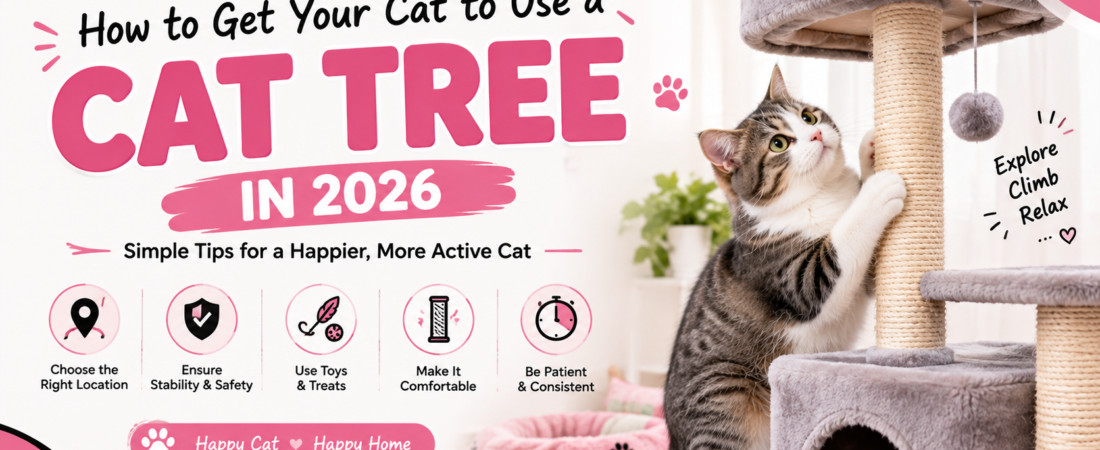
Buying a cat tree seems like a simple way to give your cat more space to climb, scratch, play, and relax. But what happens when your cat completely ignores it?
If your cat prefers sleeping on the couch, hiding under the bed, or scratching your furniture instead, you’re not alone. Many cats need time to explore and accept a new piece of furniture.
The good news is that you don’t necessarily need to buy another cat tree. With the right location, familiar scents, positive reinforcement, and a little patience, you can make the existing tree more appealing.
In this guide, we’ll explain how to get your cat to use a cat tree, common mistakes to avoid, and how to determine whether the design itself is the problem.
Why Won’t Your Cat Use the Cat Tree?
Before trying to change your cat’s behavior, identify what might be preventing them from using the tree.
1. The Location Is Wrong
Cats often prefer places where they feel safe and can observe their surroundings.
If the cat tree is hidden in a quiet corner, placed next to a noisy appliance, or positioned in an area your cat rarely visits, your cat may simply ignore it.
Many cats enjoy elevated resting places near windows or in rooms where their family spends time.
2. The Tree Feels Unstable
Cats need to feel secure when climbing and jumping.
If a cat tree wobbles, tilts, or shakes when your cat steps onto it, your cat may decide it isn’t safe.
This can be especially important for large cats, energetic jumpers, and cats that are cautious about unfamiliar objects.
Check the assembly, base, platforms, and connections before encouraging your cat to climb.
If your tree moves noticeably, follow our guide on How to Make a Cat Tree More Stable & Safe before continuing.
3. The Platforms Are Difficult to Reach
Not every cat tree suits every cat.
A tall tree with widely spaced platforms may be challenging for a kitten, a senior cat, or a cat with limited mobility.
Some cats also prefer broad platforms where they can stretch out instead of narrow perches.
Consider whether the tree’s design matches your cat’s size, age, confidence, and physical abilities.
Our Best Cat Trees for Kittens in 2026 and Best Cat Trees for Senior Cats in 2026 guides explain some of these differences.
4. The Materials Feel Unfamiliar
Cats can have strong preferences about texture.
Some enjoy scratching sisal rope, while others prefer carpet, cardboard, or horizontal scratching surfaces.
If the tree doesn’t offer a texture your cat likes, it may not become their preferred scratching spot.
5. Your Cat Needs More Time
A new cat tree changes the environment, and some cats need time to investigate unfamiliar objects.
Your cat may sniff the tree, walk around it, or watch it from a distance before approaching it.
Avoid forcing your cat onto the platforms. Allowing them to explore voluntarily can help build confidence.
10 Ways to Get Your Cat to Use a Cat Tree
1. Move the Cat Tree to a Better Location
Location is one of the easiest things to change.
Try placing the tree near a window, beside a favorite resting area, or in a room where your cat regularly spends time.
A window location can provide visual stimulation, while a family room can offer opportunities to observe household activity.
Avoid blocking walkways or placing the tree somewhere your cat could feel trapped.
For more guidance, see Where to Put a Cat Tree? Best Locations for Happy Indoor Cats.
2. Use Your Cat’s Favorite Toys
Toys can help make the tree more interesting.
Try moving a favorite wand toy around the lower platforms, encouraging your cat to investigate and climb at their own pace.
You can gradually move the toy to a higher platform if your cat appears comfortable.
Keep play sessions short and positive. Never force your cat to jump to a height they seem reluctant or physically unable to reach.
3. Reward Small Steps With Treats
Positive reinforcement can help your cat associate the tree with pleasant experiences.
Start by rewarding simple behaviors:
- Looking at the tree.
- Sniffing a platform.
- Approaching the base.
- Placing paws on the first level.
- Climbing onto a platform.
- Resting on the tree.
Use small treats your cat enjoys and reward voluntary behavior.
You don’t need to rush through every step in one session. Some cats may progress quickly, while others need several days or longer.
4. Add Familiar Bedding
Place a familiar blanket or a small bed on a suitable platform.
A familiar scent may make the tree feel less unfamiliar, particularly for a cautious cat.
Choose bedding that fits securely and doesn’t slide when your cat steps onto it.
Avoid covering scratching surfaces if your goal is to encourage scratching.
5. Encourage Scratching in the Right Place
Scratching is a natural feline behavior. Cats may scratch to maintain their claws, stretch, and leave scent marks.
If your cat scratches a sofa instead of the tree, consider the type and orientation of the scratching surface.
Some cats prefer vertical posts, while others prefer horizontal scratchers.
Place the tree near the furniture your cat already scratches, if practical, and reward your cat when they use the appropriate surface.
For more product-selection advice, see The Ultimate Guide to Choosing the Best Cat Trees for Happy Indoor Cats (2026).
6. Make the Lower Platforms Easy to Reach
Don’t assume your cat must climb to the top for the tree to be useful.
The bottom platform may be a comfortable starting point, especially for kittens, older cats, or cautious cats.
Allow your cat to become familiar with each level before encouraging more ambitious climbing.
If your cat struggles to reach the platforms, the tree may not be the right design.
7. Play Near the Tree Every Day
Consistent, low-pressure play can help your cat become familiar with the tree.
Spend a few minutes playing around its base or near a lower platform.
If your cat engages, gradually incorporate the tree into the game.
Let your cat decide whether to climb. The objective is to create a positive association, not to make the cat perform a specific action.
8. Try Catnip Only if Your Cat Responds to It
Catnip attracts some cats, but not all cats respond to it.
If your cat enjoys catnip, you can try placing a small amount on a suitable scratching surface or platform.
Don’t assume catnip will solve the problem. If your cat ignores it, focus on location, stability, texture, and comfort instead.
9. Keep the Tree Clean and Comfortable
Dust, loose fur, unpleasant odors, and damaged materials can make a cat tree less appealing.
Vacuum fabric surfaces regularly, inspect the scratching posts, and follow the manufacturer’s cleaning instructions.
Check that platforms remain secure and that no exposed staples, sharp edges, or loose components could injure your cat.
For a detailed maintenance routine, read How to Clean and Maintain a Cat Tree (2026 Complete Guide).
10. Give Your Cat Time
One of the most common mistakes is expecting immediate results.
Some cats investigate a new tree within minutes. Others may take days or longer to use it regularly.
Keep the tree accessible and continue offering positive experiences without pressure.
If your cat remains uninterested, reassess the location and design rather than simply buying more toys or treats.
How to Train a Cat to Climb a Cat Tree
If your cat is interested in the tree but hesitant to climb, use a gradual approach.
Step 1: Start at the base.
Place a treat or toy near the bottom of the tree.
Step 2: Reward exploration.
Give your cat a reward when they voluntarily approach or investigate the tree.
Step 3: Encourage the first platform.
Place a treat on a low, easily accessible level.
Step 4: Build confidence gradually.
Once your cat comfortably uses the first platform, encourage exploration of the next level.
Step 5: Let your cat choose the pace.
Never lift your cat onto a high platform and leave them there if they seem frightened. Let them climb down safely and try again another time.
The goal is confidence and voluntary use, not reaching the top as quickly as possible.
How Long Does It Take for a Cat to Use a Cat Tree?
There is no fixed timeline.
A confident cat may begin using a new tree immediately. A shy or cautious cat may need several days or weeks to become comfortable.
The timeline depends on several factors:
- Your cat’s temperament.
- Previous experience with climbing furniture.
- The tree’s location.
- Stability and platform design.
- Familiarity with the materials.
- Whether the cat feels safe in the room.
Focus on gradual progress rather than a deadline.
What If Your Cat Still Ignores the Cat Tree?
If you’ve tried different locations and positive reinforcement without success, look more closely at the tree itself.
Check the Height
A tree may be too short to offer the elevated resting place your cat prefers, or too tall and difficult to climb.
Compare your cat’s behavior with the design and choose a suitable height.
Check Platform Size
Large cats may need wider platforms, while some cats prefer enclosed spaces for resting.
If your cat struggles to fit comfortably or turn around, the platform dimensions may be unsuitable.
Check the Scratching Surface
Your cat may prefer a different material or orientation.
A vertical sisal post may not appeal to a cat that usually scratches a horizontal cardboard pad.
Check for Noise and Movement
A loose platform, rattling component, or wobbly base can undermine your cat’s confidence.
Inspect the tree and correct any safety problems before encouraging further use.
Consider Whether Your Cat Actually Likes the Design
Not every cat enjoys climbing tall structures.
Some prefer window perches, low platforms, shelves designed for cats, or separate scratching posts.
A cat tree is useful only if it meets your cat’s needs. Don’t assume that buying a taller or more expensive model will automatically solve the problem.
Common Mistakes to Avoid
Forcing Your Cat Onto the Tree
Holding your cat on a high platform may create fear rather than confidence.
Allow voluntary exploration and make the lower levels inviting.
Placing the Tree in an Isolated Area
A tree in an unused room may receive little attention if your cat prefers spending time elsewhere.
Choose a location based on your cat’s existing habits.
Using Treats Without Fixing the Underlying Problem
Treats cannot compensate for an unstable tree, uncomfortable platforms, or a difficult climbing route.
Fix design and safety problems first.
Expecting Every Cat to Love the Same Tree
Age, size, temperament, and texture preferences all influence how a cat uses furniture.
Choose a design for your individual cat rather than assuming every cat needs the tallest available model.
Ignoring Signs of Discomfort
If a cat that previously climbed comfortably suddenly stops jumping or using elevated spaces, don’t automatically assume the tree is the problem.
Pain or mobility changes may affect climbing behavior. Consult a veterinarian if the change is sudden, persistent, or accompanied by other concerning symptoms.
How to Choose a Cat Tree Your Cat Will Actually Use
If you are considering replacing an unsuitable tree, evaluate the features that matter most.
Stability: The tree should remain secure during normal climbing and jumping.
Platform size: Resting areas should comfortably accommodate your cat.
Accessible design: Platform spacing and entry points should match your cat’s abilities.
Scratching materials: Look for surfaces that match your cat’s scratching preferences.
Location: Consider where your cat likes to rest, observe, and play.
Maintenance: Choose materials that can be cleaned and maintained easily.
If you live in a smaller home, see Best Cat Trees for Small Apartments in 2026. For households with several cats, Best Cat Trees for Multiple Cats in 2026 can help you compare space and layout requirements.
Final Thoughts
Getting your cat to use a cat tree is often a matter of making the tree feel safe, comfortable, and rewarding.
Start by choosing a suitable location, checking stability, and offering familiar toys or bedding. Reward small steps and allow your cat to explore at their own pace.
If your cat continues to ignore the tree, don’t automatically assume they are stubborn. The height, texture, platform size, or location may simply not suit their preferences.
The best cat tree is not necessarily the tallest or most expensive model. It is one that your cat can use safely and comfortably.
Frequently Asked Questions
Why does my cat ignore the cat tree?
Your cat may dislike its location, find the platforms uncomfortable, feel that the tree is unstable, or simply need more time to adjust. Check these factors before replacing it.
How do I attract my cat to a cat tree?
Place it in a preferred location, use familiar bedding, offer favorite toys, and reward voluntary exploration with treats. Avoid forcing your cat to climb.
Should I put catnip on a cat tree?
You can try it if your cat responds to catnip. However, not all cats are interested in it, and catnip won’t solve problems involving stability, location, or uncomfortable design.
Where should I place a cat tree?
Many cats enjoy trees near windows or in rooms where their family spends time. Choose a safe location that matches your cat’s habits and provides enough space for climbing.
Why does my cat scratch furniture instead of the cat tree?
Your cat may prefer the furniture’s texture or scratching orientation, or the tree may be poorly positioned. Try placing a suitable scratching surface near the area your cat already uses.
Should I buy a new cat tree if my cat won’t use the current one?
Not immediately. First, try changing its location, checking stability, and making the tree more inviting. Consider a replacement if the design is unsuitable or cannot be made safe.
Can senior cats learn to use a cat tree?
Yes, provided the tree suits their mobility and comfort. Choose accessible platforms and avoid requiring difficult jumps. If your senior cat suddenly stops climbing, consult a veterinarian to rule out health problems.
Related Cat Tree Guides
- How to Choose the Right Cat Tree (2026 Guide)
- Where to Put a Cat Tree? Best Locations for Happy Indoor Cats
- How to Make a Cat Tree More Stable & Safe (2026 Guide)
- How to Clean and Maintain a Cat Tree (2026 Complete Guide)
- Best Cat Trees for Active Cats in 2026
- Best Cat Trees for Shy Cats in 2026
- Best Cat Trees for Senior Cats in 2026
- Best Cat Trees for Kittens in 2026
- Best Cat Trees for Small Apartments in 2026